
A balanced diet is the daily pattern of eating that supplies the right mix of protein, carbohydrates, healthy fats, fiber, vitamins, and minerals for your goals. For Toronto-area readers, BiteBox in Etobicoke turns this into action with 5-day, protein-forward meal plans delivered Monday–Friday, 4 AM–12 PM, so healthy choices are waiting at your door.
By Sushen Dang — Founder & CEO, BiteBox
Last updated: 2026-04-27
Above-Fold Section: Hook + Table of Contents
A balanced diet fuels energy, supports metabolism, and keeps hunger steady by combining lean proteins, complex carbs, healthy fats, and produce in the right amounts. BiteBox makes it effortless with 5-day plans built around protein targets and weekday morning delivery, so you start each day nourished without cooking or guesswork.
Busy week ahead? This guide shows you how to turn balanced-diet theory into practical weekday wins—especially if you live in Etobicoke or the wider Toronto metro and want health-focused meals without kitchen time.
- What a balanced diet is and how it works
- Why balance matters for weight, muscle, and focus
- Exactly how to build balanced plates (with examples)
- Three approaches: Balanced, Body Builder, Weight Loss
- Best practices for busy schedules and condo living
- Tools and resources (including BiteBox’s self-serve portal)
- Mini case studies from Toronto lifestyles
Prefer to jump right in? Explore our weekday plans on the BiteBox meals page and see how a protein-forward, balanced diet can fit your routine.
Overview
A balanced diet pairs lean proteins, whole grains, healthy fats, and colorful produce in portions that fit your goals. Aim for steady protein at every meal, fiber for fullness, and minimally processed choices. Plan ahead with 5-day menus to automate good decisions and keep energy stable all week.
Here’s the short version of how to live it during a busy workweek:
- Anchor every plate with a meaningful protein source.
- Add a whole-grain or starchy vegetable for lasting energy.
- Include vegetables or fruit for volume, fiber, and micronutrients.
- Finish with healthy fats to improve satisfaction and absorption.
- Use a 5-day structure so weekday choices are pre-decided.
What Is a Balanced Diet?
A balanced diet is an eating pattern that supplies enough protein, complex carbohydrates, healthy fats, fiber, and micronutrients to meet daily needs. It prioritizes minimally processed foods, varied colors, and consistent portions tailored to your goals, helping stabilize energy, appetite, and performance throughout the day.
At its core, a balanced diet isn’t a single menu—it’s a framework. You combine:
- Protein for muscle maintenance, satiety, and recovery
- Complex carbs (whole grains, legumes, starchy veg) for steady energy
- Healthy fats (olive oil, nuts, seeds, avocado) for hormones and fullness
- Produce (vegetables, fruits) for fiber, vitamins, minerals, and phytonutrients
Common daily targets often referenced by dietitians: fiber in the 25–38 g range, added sugars below 10% of calories, and sodium around 2,300 mg or less. Portion sizes flex by goal: weight loss leans on calorie control and high-fiber foods; muscle gain demands higher total energy and protein distribution.
When you’re juggling work, commuting, and condo life, planning is the force multiplier. This is why BiteBox organizes the week into 5-day rotations—so the balanced-diet framework shows up at your door ready to eat, no decision fatigue required.
Why a Balanced Diet Matters
A balanced diet matters because it improves energy, supports a healthy weight, preserves muscle, and reduces long-term health risks. In Etobicoke and across Toronto, weekday structure turns intent into habit—prepped, protein-forward meals remove friction and keep macro targets consistent.
Why does this hit so hard for busy schedules?
- Energy and focus: Protein plus complex carbs slows digestion, curbing midmorning and midafternoon crashes.
- Appetite control: Fiber and protein help you feel full on fewer calories, a key advantage for weight management.
- Muscle maintenance: Regular protein feeds recovery, especially for strength training and active commutes.
- Heart and metabolic health: Emphasizing unsaturated fats and produce supports better long-term markers.
From public-health guidance to sports nutrition, the signal is consistent: distribute protein throughout the day, pair it with fiber-rich carbs, and include healthy fats. The result is steadier glucose, better cravings management, and meals that actually taste good. BiteBox operationalizes this with rotating menus, so each day brings variety without leaving balance behind.
How a Balanced Diet Works (The Plate Method + Protein Timing)
Build balanced plates by combining a palm or two of protein, a fist of whole-grain or starchy carbs, two fists of vegetables or fruit, and a thumb of healthy fats. Distribute protein evenly across meals to support satiety and recovery, then repeat this pattern five days straight for consistent results.
Use this simple structure to shape nearly any cuisine—including Indian-inspired flavors that make routine feel exciting:
- Protein anchor: Chicken tikka, paneer, lentils, or chickpeas
- Complex carbs: Brown rice, quinoa, roti, or sweet potato
- Vegetables: A generous mix—saag, roasted cauliflower, peppers, greens
- Healthy fats: A drizzle of olive oil, a handful of nuts, or seeds
Protein distribution matters. Many adults feel and perform better when protein isn’t backloaded at dinner but spread across breakfast, lunch, and dinner. Pair with fiber (legumes, greens, whole grains) to tame hunger. Hydration amplifies the effect—water first, then coffee or tea as you like.
Automate the pattern Monday to Friday, and you build momentum. That’s the idea behind BiteBox’s 5-day cadence and why weekday morning delivery between 4 AM and 12 PM is so effective for our audience—you wake up, and balance is already solved.
Types, Methods, and Approaches (Mapped to BiteBox Plans)
Match your balanced-diet approach to your goal: a general Balanced pattern for maintenance, a higher-calorie Body Builder pattern for muscle gain, or a calorie-controlled Weight Loss pattern. Keep the same plate structure, then scale portions and protein to your needs.
Here’s how the same balanced framework flexes by goal using BiteBox’s 5-day structure:
| Approach | Daily Focus | Approx. Targets | Best For | Example Add-Ons |
|---|---|---|---|---|
| Balanced | Steady energy, variety, and maintenance | ~2,000 calories, ~95 g protein | General health, active commuting, busy weeks | Greek yogurt + berries; mixed nuts |
| Body Builder | Higher energy and protein distribution | ~2,800 calories, ~135 g protein | Strength training, muscle gain | Protein smoothie post-workout |
| Weight Loss | Calorie control with high fiber and protein | ~1,500 calories, ~85 g protein | Fat loss with steady satiety | Veg-forward sides; fruit |
Want a closer look at how this shows up in meals? See our higher-protein option on the Body Builder Plan page, and explore calorie-controlled structure on the Weight Loss Plan page. Prefer to browse week-to-week? Start from our BiteBox meals overview.
Best Practices for a Balanced Diet (Weekday Edition)
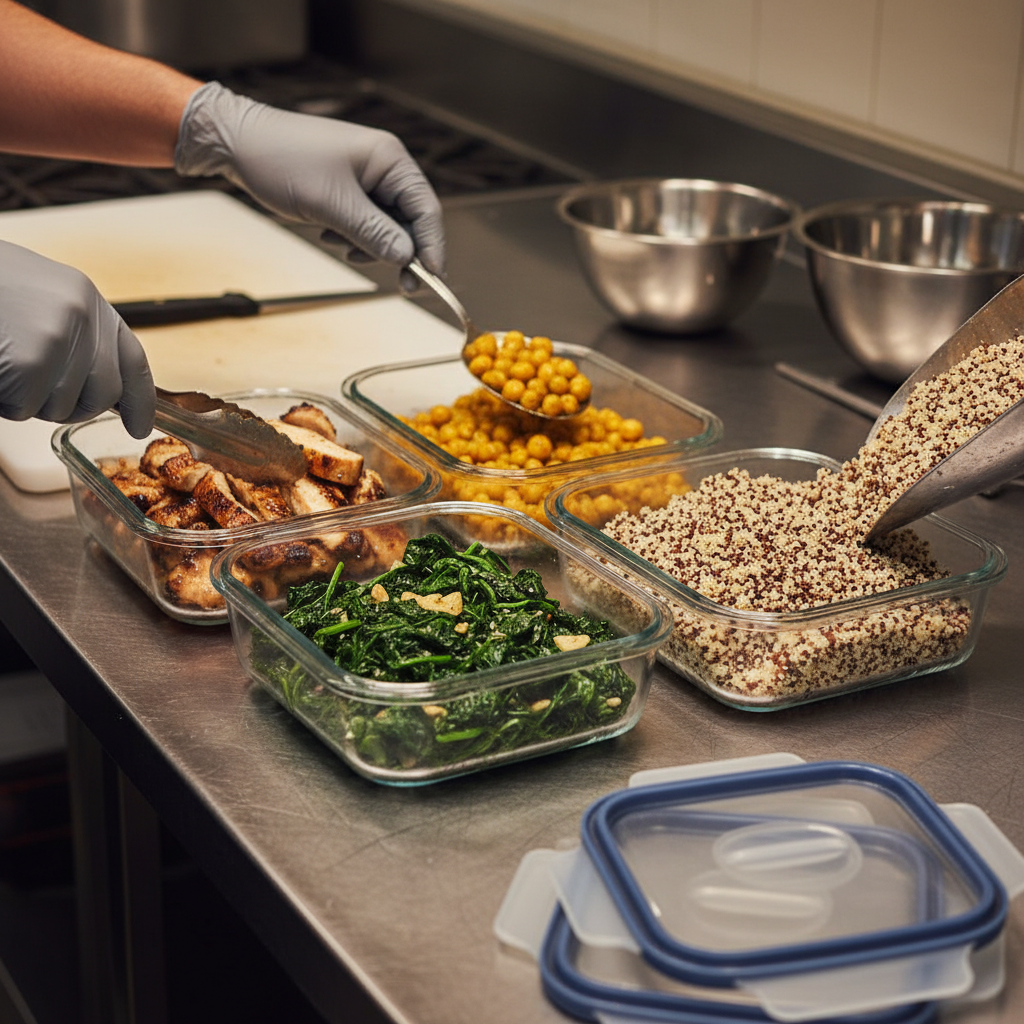
Lock in balance by standardizing breakfast, rotating two or three lunches, and letting dinner flex within guardrails. Front-load protein, hydrate early, and keep produce visible. Use pre-portioned meals to prevent guesswork and decision fatigue, especially during high-stress weeks.
Practical guardrails that work
- Standardize breakfast: Greek yogurt with berries and nuts, or a veggie omelet with whole-grain toast.
- Two lunch rotations: For example, grilled chicken with brown rice and greens; chickpea masala with quinoa and roasted veg.
- Flexible dinners: Choose a protein + complex carb + colorful veg + healthy fat. Keep the structure, change the flavors.
- Protein timing: Distribute across 3 meals (and a shake if training) to support satiety and recovery.
- Hydration routine: Water when you wake, water at lunch, water before dinner—build rituals.
- Visible produce: If you see it, you’ll eat it. Pre-wash and set out ready-to-eat options.
Local considerations for Etobicoke
- Use BiteBox’s morning window if you commute via Dixon Rd at Martin Grove Rd—your meals can arrive before you’re out the door.
- Winter in Toronto can disrupt evening routines; morning delivery stabilizes weekday nutrition when daylight is short and temps drop.
- Condo life? Opt for our upstairs delivery add-on so meals reach your unit without elevator back-and-forth.
If you want variety without losing structure, tap into our Indian-inspired rotations and vegetarian-friendly options (including Jain-friendly sets). For non-vegetarian days, our roti–rice combos keep balance intact while switching flavors.
Tools and Resources That Make Balance Easier
Use a repeatable plate template, pre-portioned weekday meals, and a self-serve portal to manage skips, pauses, and deliveries. Pair your meals with protein smoothies post-workout and a simple produce rotation. Automation beats motivation on busy weeks.

How to Build Balanced Meals Step-by-Step
Start with a protein anchor, add a fiber-rich carb, double up on vegetables, and finish with a small portion of healthy fats. Repeat this template across five weekdays using flavors you love—consistency beats perfection for long-term results.
- Pick your protein: Grilled chicken, salmon, paneer, tofu, lentils, or chickpeas.
- Choose your carb: Brown rice, quinoa, roti, whole-grain pasta, or potatoes.
- Double the produce: Combine cooked and raw vegetables for volume and micronutrients.
- Add healthy fats: Olive oil, avocado, nuts, seeds, or tahini.
- Season smart: Herbs, spices, citrus, and yogurt-based sauces add flavor without excess sugar.
For post-workout days, add a recovery step: a smoothie within 60–90 minutes to backfill glycogen and protein. Many BiteBox athletes carry a shake to the gym and drink it on the way home or before their morning shower.
Evidence and Standards (What the Guidance Says)
Evidence-based nutrition guidance emphasizes nutrient-dense foods, protein distribution, fiber intake, hydration, and limits on added sugars and sodium. Use these standards to check your weekday routine and keep your balanced diet aligned with trusted recommendations.
To keep things simple, align your week with widely cited standards:
- Fiber: Many adults benefit from roughly 25–38 g per day from vegetables, legumes, fruits, and whole grains.
- Added sugars: Keep to less than 10% of daily calories by flavoring with spices, citrus, and yogurt instead.
- Sodium: About 2,300 mg or less suits most adults; taste with herbs before salting.
- Hydration: Water as your default. Coffee and tea fit when you enjoy them.
- Plate balance: Visualize half-veggies, a quarter protein, and a quarter whole grains or starchy veg.
Case Studies and Real-World Examples (Toronto Lifestyles)
Balanced eating gains traction when it fits your life. In Toronto, early morning delivery, 5-day rotations, and Indian-inspired variety help busy professionals, students, and lifters maintain protein targets without cooking. These snapshots show how small structural choices drive big consistency.
Case 1: The early train commuter
A North York analyst leaves before sunrise. With BiteBox’s morning window, breakfast is ready on the counter—Greek yogurt with berries and nuts. Lunch alternates between grilled chicken bowls and chickpea masala. Dinner rotates across roti–rice combos and greens. Result: fewer vending-machine detours, steadier afternoons.
Case 2: The condo lifter
A downtown Toronto lifter uses our Body Builder pattern. Strength sessions happen at 6 AM with a smoothie before or after. Meals increase starch slightly on training days (quinoa, potatoes) while keeping vegetables high. The upstairs delivery add-on protects routine on late nights.
Case 3: The finals-week student
During exams, decision fatigue ruins good plans. A 5-day Weight Loss rotation keeps energy steady with legumes, lean proteins, and lots of veg. Swaps are managed in the self-serve portal. Test-week takeaway: automate the week so you don’t rely on willpower when stress spikes.
Frequently Asked Questions
Common questions focus on protein timing, carbohydrate choices, and how to stay consistent when life gets messy. Here are direct, practical answers that align with balanced-diet principles and BiteBox’s weekday structure.
How much protein should I aim for with a balanced diet?
Distribute protein across breakfast, lunch, and dinner, with an optional shake if you train. Many adults do well with a palm or two of protein per meal. The goal is steady satiety and recovery, not perfection at one sitting.
What carbs fit best in a balanced meal?
Choose fiber-rich options like brown rice, quinoa, potatoes, legumes, and whole-grain roti. Pair them with vegetables and lean protein to steady energy and appetite. Keep added sugars for treats you truly enjoy, not everyday staples.
How can I stay consistent when my schedule changes?
Automate weekdays. Use a 5-day rotation and a self-serve portal to skip, pause, or adjust deliveries when travel or late nights pop up. Keep a protein smoothie ready as a flexible backstop on hectic days.
Can a balanced diet include Indian-inspired dishes?
Absolutely. Use legumes, paneer, yogurt, vegetables, and whole grains as your base. Season with spices for flavor without excess sugar. The plate method works across cuisines—you keep the structure and change the taste.
Conclusion and Next Steps
A balanced diet is repeatable structure, not constant willpower. Build plates with protein, fiber-rich carbs, vegetables, and healthy fats; then automate five weekdays so the work is done before your day begins. Small guardrails compound into real results.
- Key takeaways: Protein at every meal, fiber for fullness, simple hydration rituals, and minimal added sugars.
- Action step: Choose a 5-day approach—Balanced, Body Builder, or Weight Loss—based on your next 30 days.
- Make it easy: Use weekday morning delivery and upstairs service if you’re in a condo.
Key Takeaways: Distribute protein, load vegetables, pick fiber-rich carbs, and keep healthy fats modest. Automate five weekdays to remove decision fatigue. Consistency beats intensity.
Ready to put balance on autopilot? Start from the BiteBox meals overview, dial in your goal, and use the self-serve controls to skip or pause when life gets busy. We deliver from Etobicoke across the Toronto metro—weekday mornings between 4 AM and noon.
Curious how a balanced diet looks on your plate? Browse our rotating menus and goal-based plans. If you lift, consider a smoothie add-on; if you commute early, lean on morning delivery. Your weekday routine should work for you, not against you.
Explore: Body Builder | Weight Loss | Shakes & Smoothies